For most historians, an academic book reaches a specialized audience, earns a place on library shelves, and becomes part of scholarly conversation.
John Waller’s book took a very different path, inspiring documentaries, podcasts, stage productions, music, fiction, and even a possible Hollywood adaptation.

"It's quite extraordinary, the life that it's assumed," said Dr. Waller, associate professor of history and director of the College of Social Sciences’ Social Science Scholars Program at Michigan State University.
“It’s garnered so much cultural interest, so much interest among creatives.”
A book with a life of its own
The book is A Time to Dance, A Time to Die, Dr. Waller's 2008 investigation into one of history's most baffling events: the Dancing Plague of 1518.
More than 500 years ago, residents of Strasbourg, then part of the Holy Roman Empire, began dancing uncontrollably. Some danced for days. Others danced until collapsing from exhaustion and died.
What began as a historical curiosity became one of Dr. Waller's most influential works to date, drawing international attention and inspiring a remarkable range of creative projects. A Florence + The Machine song was inspired by the story, while novelists around the world adapted the story into fiction. An award-winning short film, documentaries, podcasts, a ballet, stage productions, and more have all drawn on Dr. Waller's research.
Today, the book continues to attract new audiences, with adaptations and media projects still emerging (see list below).
For Dr. Waller, the fascination of the Dancing Plague became a window into a larger question that has shaped much of his career: how culture, belief, and circumstance influence human behavior.
Searching for an explanation
Dr. Waller first encountered the Dancing Plague while teaching the history of psychiatry at the University of Melbourne in the early 2000s. At the time, many believed the episode may have been caused by ergot poisoning, a toxic mold that grows on rye and can produce hallucinations, like LSD.
The explanation sounded plausible. But the more Dr. Waller investigated, the less convincing it became.
“I decided I was going to write a book about it, and my expectation was that the phenomenon would not be explainable this long after the events took place,” he said.
Instead, years of research led him to a different conclusion.
By examining records from sixteenth-century Strasbourg and studying similar outbreaks across Europe, Dr. Waller found patterns that suggested the episode was a form of mass psychogenic illness, sometimes referred to as mass hysteria. Communities along the River Rhine’s tributaries shared a widespread belief that a particular saint, St. Vitus, could curse individuals with uncontrollable dancing. Dr. Waller argues that those beliefs provided a cultural framework through which extreme stress and hardship could be expressed.
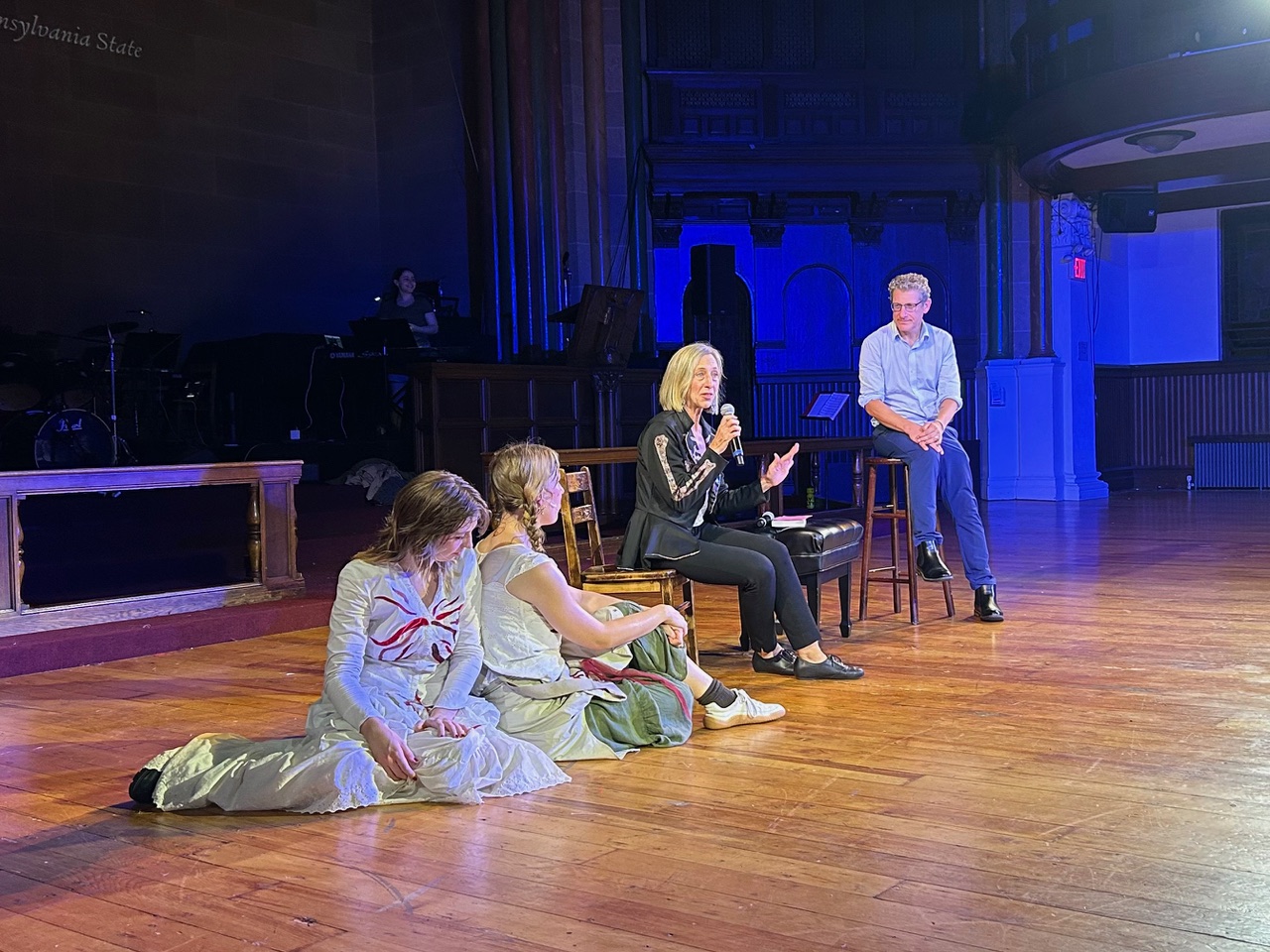
“What we see in the Dancing Plague is relevant to how we think about psychiatric conditions today,” Dr. Waller said. For him, the episode suggests that psychological distress is not always expressed in the same way across cultures or historical periods. Social expectations, beliefs, and environments influence how symptoms emerge and spread.
More than 500 years later, the questions at the heart of the Dancing Plague remain surprisingly familiar: How do people respond to stress? How much do culture and environment shape our experiences? Why do individuals and groups behave in ways that initially seem impossible to understand?
Similar outbreaks still occur today, often in high-pressure environments. Dr. Waller believes such cases serve as a reminder that the relationship between mind, body, culture, and belief remains more complex than people assume.
History with contemporary relevance
Although Dr. Waller's academic training focused on nineteenth- and twentieth-century science and medicine, his seven published books have explored subjects ranging from the birth of germ theory and child labor to scientific discovery and the history of heredity. Across them runs a common theme: using historical evidence to better understand the present.
“I very much believe that history should and can reflect on the present,” Dr. Waller said.
His newest book project, Them and Us: Why We Are Sometimes Kind and Sometimes Vicious, draws on 14,000 years of human history to examine recurring patterns of cooperation and conflict.
The project represents more than a decade of research and reflects Dr. Waller’s growing interest in what some scholars call “big history”—broad, interdisciplinary studies that look for recurring patterns across long periods of time.
“I think there are so many recurrent patterns in history,” he said. “We have the same brain, we have the same needs and susceptibilities and tendencies that members of our species have always had which allows us to go to the past and explore those parallels.”
Scholarship beyond the academy
Dr. Waller's willingness to engage public audiences has made him an especially visible historian.
His work has been featured by major news outlets, documentaries, podcasts, and cultural organizations around the world. The Guardian, BBC, The Telegraph, and The Lancet have highlighted his research on the Dancing Plague. He has advised filmmakers, collaborated with screenwriters, and contributed to popular podcasts including Dan Snow’s History Hits and My Favorite Murder.
“I don't think it's a bad thing making history readable and relevant to people,” he said.
That philosophy reflects a central theme in Dr. Waller's research: using the past to better understand people. Whether mentoring students, writing books, or explaining a 500-year-old dancing epidemic, he sees history as a tool for understanding human behavior.
“It's the kind of history that I believe in,” he said.
SELECTED CREATIVE WORKS INSPIRED BY A TIME TO DANCE, A TIME TO DIE
Television & Streaming
- The Dancing Plague (2026)
- Strasbourg 1518 by Jonathon Glazer (2020)
Novels & Graphic Novels
Music
Podcasts
Documentary Films
- The Fear of Dancing (2020)
Feature Films
- VITUS (forthcoming)
Theatrical Productions
- Choreomania 1518 (2025)
- CARNIVALE.6 (2024)
- Strasbourg 1518 (2020 ballet by New Zealand's Borderline Arts Ensemble)