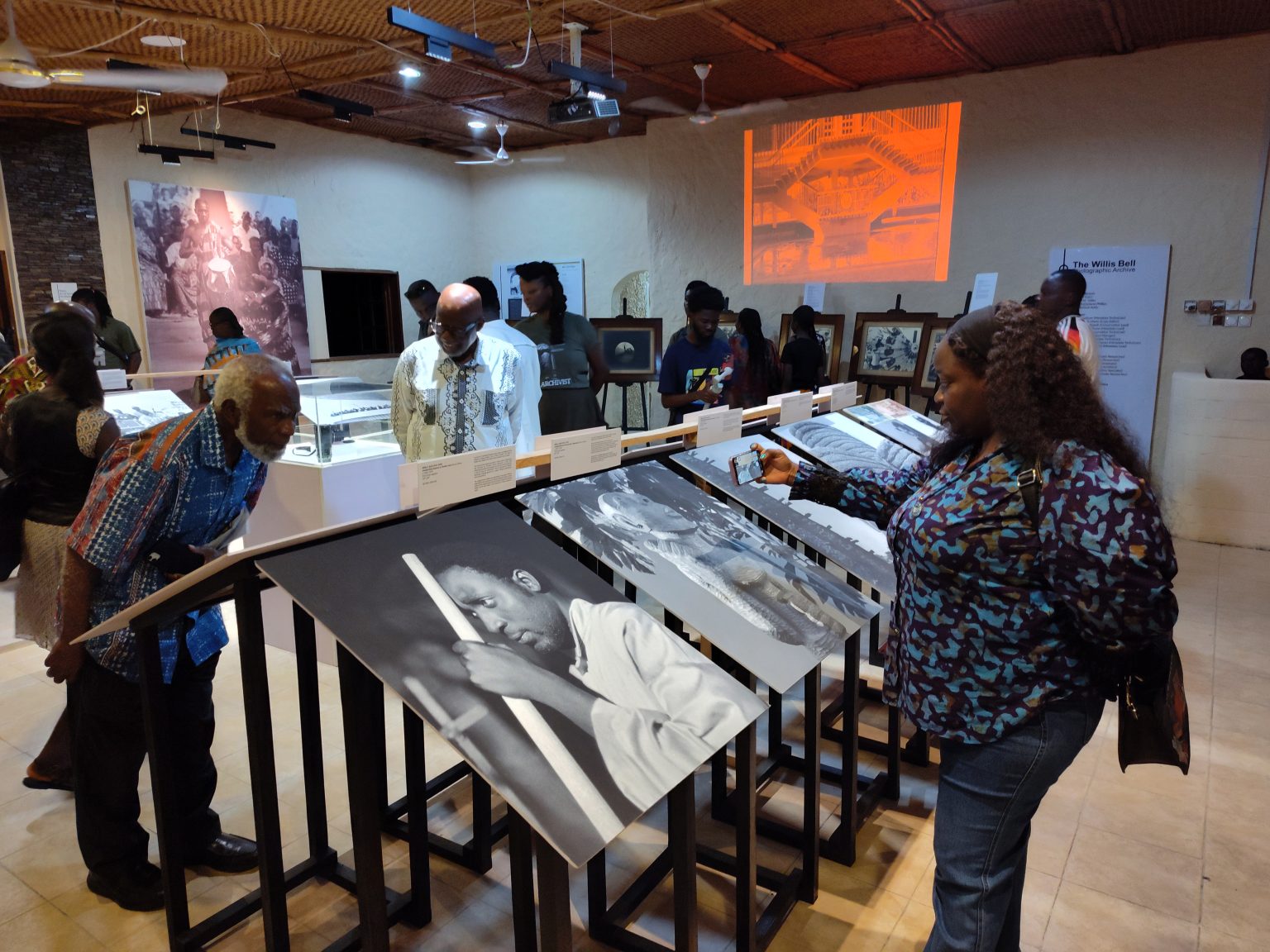
The opening of the new exhibition drew visitors who moved thoughtfully from frame to frame. They lingered at images of dancers, schoolchildren, and structures that once stood as symbols of a modern nation in motion. Some smiled in recognition, others leaned in with quiet curiosity or broke into impromptu conversations about memory and possibility in Ghana.
One attendee moved through with his one‑string gonje fiddle, recording himself as he played and sang about hope. His spontaneous performance became a tribute, just one reaction among many as visitors have been swept up by the promise and poignancy of a young Ghana seen through the lens of renowned photographer Willis Bell.
A photographer in a new nation
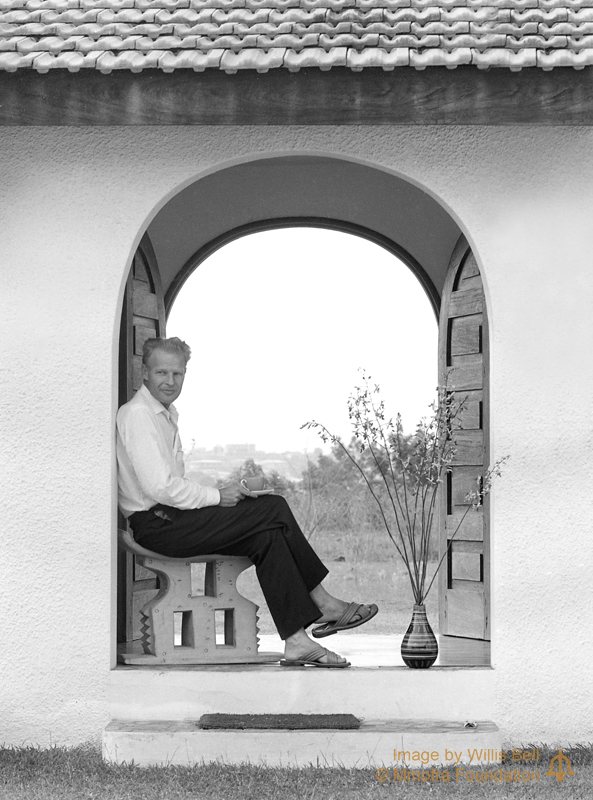
Bell, an American photographer, arrived in Ghana around 1958 and quickly found himself amid a diverse and brilliant group of people. He collaborated with celebrated playwright, poet, and performer Efua Sutherland on photo essays, documented artists like Kofi Antubam and Vincent Kofi, photographed ceremonies and street scenes, industry and infrastructure, and trained advertising photographers in the 1970s who would help shape Ghana’s visual culture for decades.
“He captured people how they wanted to be seen,” says Candace Keller, associate professor of African art and visual culture at Michigan State University. “His work fills people with pride.”
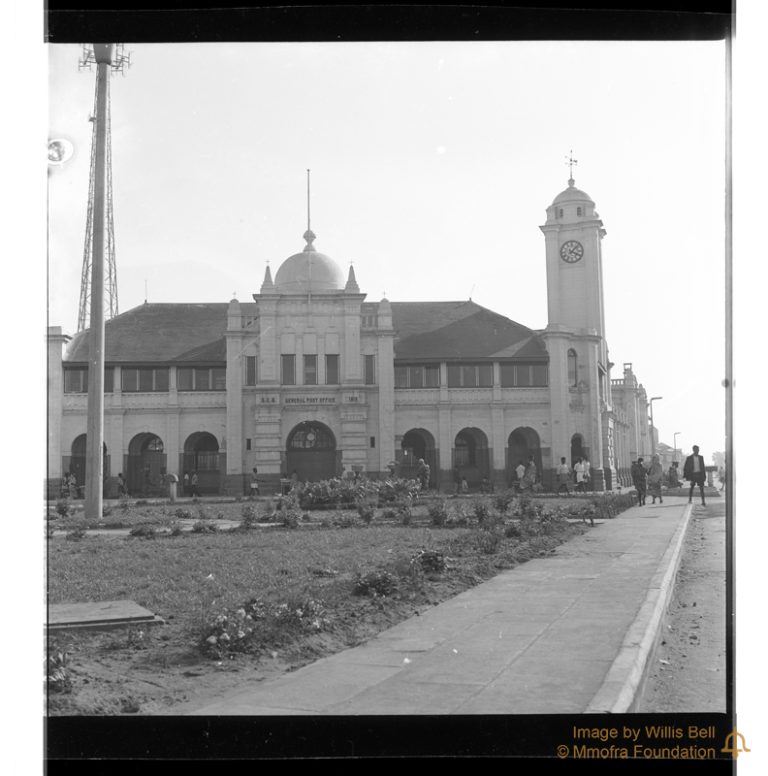
Upon his passing in 1999, Bell gifted his collection of more than 40,000 negatives and prints spanning roughly from 1957 to 1978 to Mmofra Foundation, a Ghanaian civic organization dedicated to cultural enrichment for youth. That collection forms one of the most complete visual records of early post‑independence Ghana: studio portraits, political pageantry, modernist architecture, festivals, artists at work, infrastructure, and the simple rhythms of everyday life.
It’s also incredibly rare. Mid‑century photographic archives in West Africa of this scale often didn’t survive intact. They were lost to climate or storage constraints, or practices that removed negatives from the communities they portrayed. This one endured because it remained rooted in place—in Ghana, and within a community that cared, on the very property where Bell’s studio once stood.
The project takes root
It has taken decades to bring the Willis Bell Photographic Archive, and now its public exhibition, to life.
By the early 2000s, Mmofra Foundation had long envisioned preserving and making the archive more accessible but lacked the resources to do so at the required scale. Various institutional partnerships helped move the project forward, but bringing the archive to completion required deeper, sustained support.
Through “two degrees of separation,” a mutual connection put Amowi Sutherland Phillips, one of the archive project directors in Accra, Ghana, in touch with Keller. Mmofra had also discovered MSU’s Archive of Malian Photography, a project that combined preservation, digitization, and community-centered ethical access, and they recognized the partnership they needed.
“That was just the beginning of an extraordinarily fruitful, mutually respectful, and productive relationship,” says Phillips.
Reviving a landmark archive
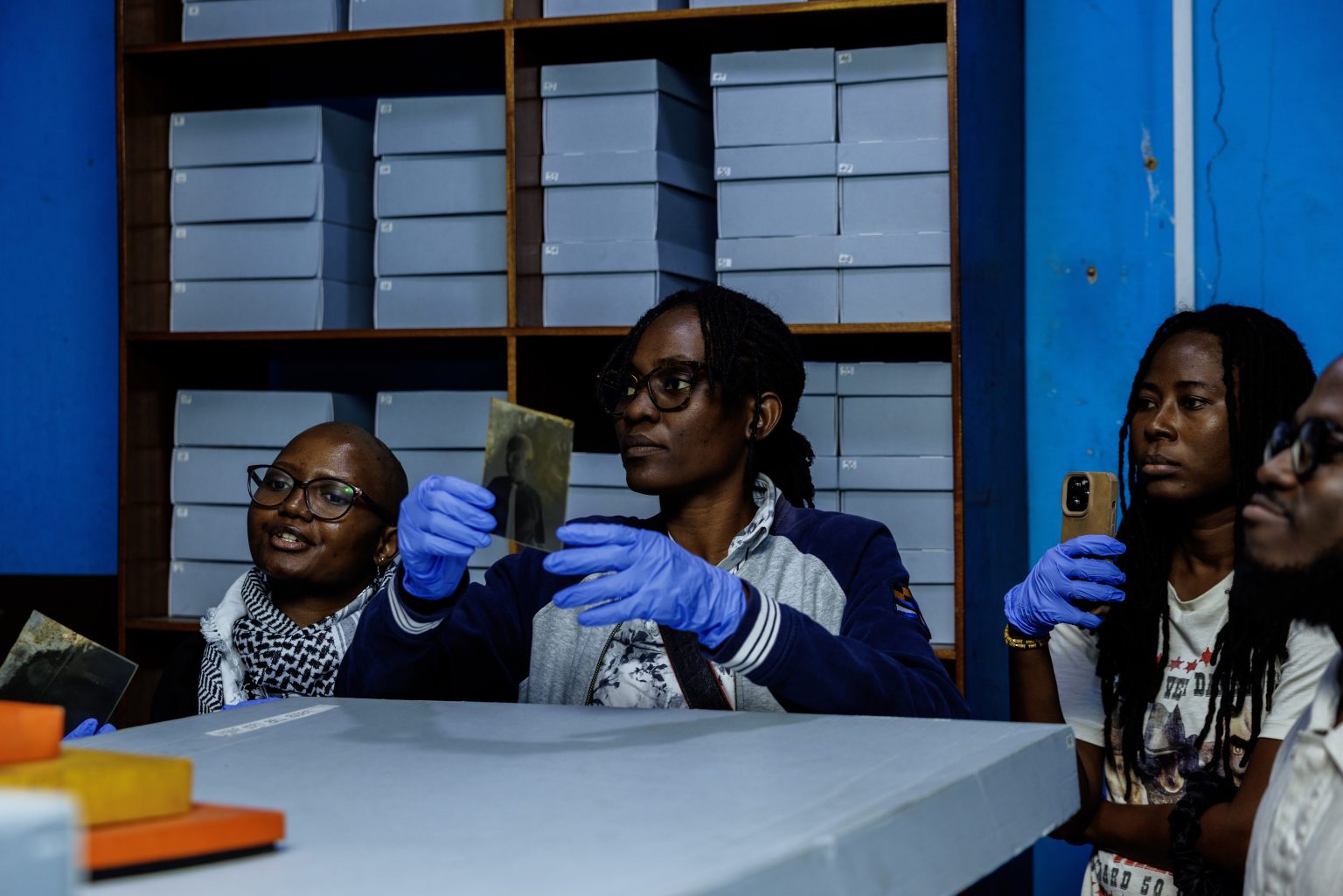
What followed became a fully collaborative, cross‑continental effort. “From day one, this was about doing the work in Ghana, for Ghanaians,” Keller says. The partners co-designed a plan to keep the physical archive in Accra, while training a local team to conserve, digitize, and catalog the 40,000 images onsite. MSU’s Matrix supported Mmofra in securing a grant from UCLA’s Modern Endangered Archives Program (MEAP), and MSU later received a National Endowment for the Humanities award to further the project. That funding allowed the Ghana team to build the infrastructure, equipment, and staffing needed to stabilize and process the archive.
“MSU helped us secure the MEAP funding from UCLA because they understood the goal wasn’t institutional credit,” says Phillips. “It was getting the work done right.”
The team paired archival rigor with local knowledge to return context, dignity, and access to a living Ghanaian history. Weekly Zoom meetings, WhatsApp troubleshooting, and ever‑expanding processes kept two continents moving in sync. What began as a 16‑page workflow document grew into an 82‑page manual of techniques and standards to meet the project’s massive scale.
Namata Serumaga-Musisi, a PhD student in African Studies with background in architecture and the project’s metadata lead notes, “MSU brought such a wealth of knowledge, and yet made space for us to find solutions our way. It was mutual respect from day one.”
“We always called this group the dream team,” says Keller. “Every single decision we made—down to watermark colors and where a logo sits—was a collaborative enterprise.”
Kwame Crentsil, project manager in Accra, says the experience shaped the team as much as the archive itself: “When we are in a space where we are skilled, talented, and have leaders who want to see the best in us—who want to see us grow and develop—it changes everything. That’s what this team felt like.”
Turning negatives into knowledge
If scanning and rehousing saved the images, metadata returned their meaning. Serumaga-Musisi developed approaches to navigate cognitive overload across tens of thousands of frames and countless themes—portraits, modernist buildings, indigenous architecture, festivals, courts, dams, advertising, theater.
“There were days you felt saturated because there was so much information to work with,” she says. “We used techniques like color‑coding abstracts so you could batch by theme… do all the architecture today, portraits tomorrow. And we had to draw a line: how much detail is enough to meet deadlines without losing integrity?”
It wasn’t easy. “There’s about 19 million PhDs worth of research in these images,” she laughs.
“I was learning constantly,” says Keller. “About key individuals, histories, and developments I’d never encountered. I teach very specific periods and places; to have an archive that documents this era so vividly is incredibly powerful and exciting, both for my research and my teaching.”
“We had to be disciplined,” Serumaga-Musisi adds. “And we had to remember that archives are living, and that the information can keep being updated.”
She says what she valued most was the ethos behind the work: “For me, what I’ve appreciated most is the generosity MSU brought to the table and the mutual respect that was clear from the very first time I interacted with them. It’s not always that people from such rich experiential backgrounds relate to everyone they meet just as they are—and see each person as valuable.”
What the images teach back
Bell had a knack for becoming “a fly on the wall,” says Esi Sutherland-Addy, director of Mmofra Foundation and another project director in Accra. “Yet he was able to depict what you’re seeing with such empathy and understanding. Those are the things that come across in his work.”
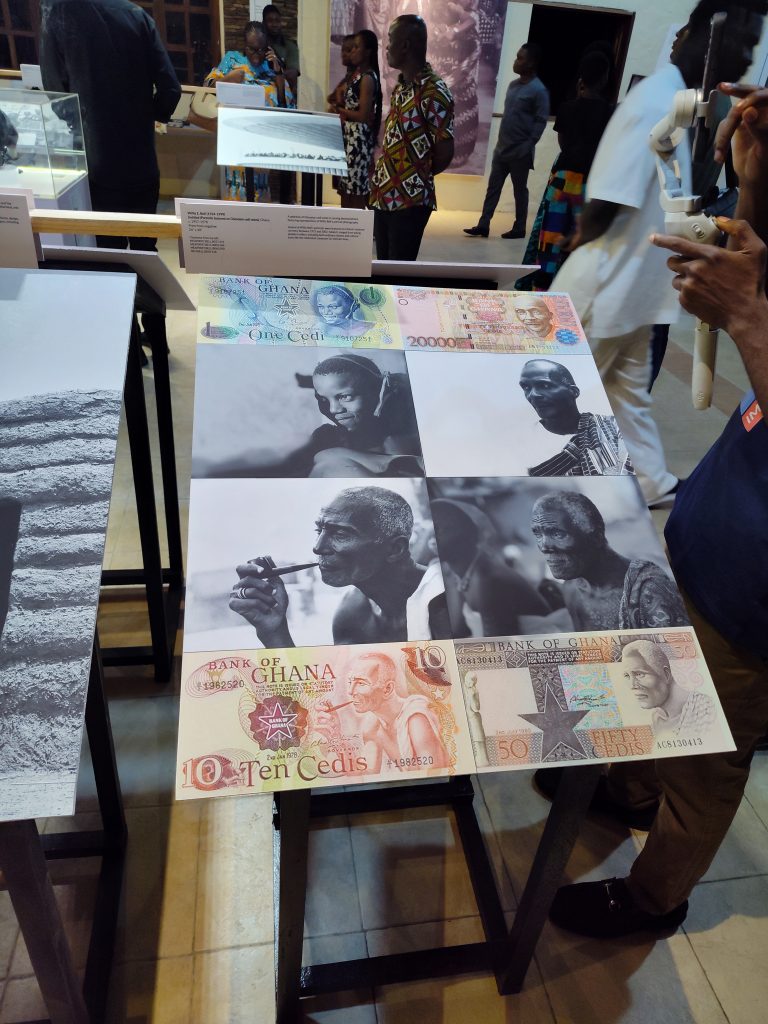
Festival photography often captures movement, color, and energy—not direct engagement with the camera. Crentsil noted that Bell’s images show something different: the kind of trust that comes from years of being welcomed into intimate and significant moments. “When you observe the festivals and processions, you find so many people staring at him,” he said. “How he was able to maneuver within community and still maintain that level of artistry and aesthetics, and come out with so many beautiful shots… that’s, for me, one of the most striking things about his work.”
The team’s own craft evolved in conversation with the work: “I started asking myself on shoots, ‘How would Bell have framed this?’ If I’d seen this archive before, say, film school, I’d have done things differently. I would have seen differently.”
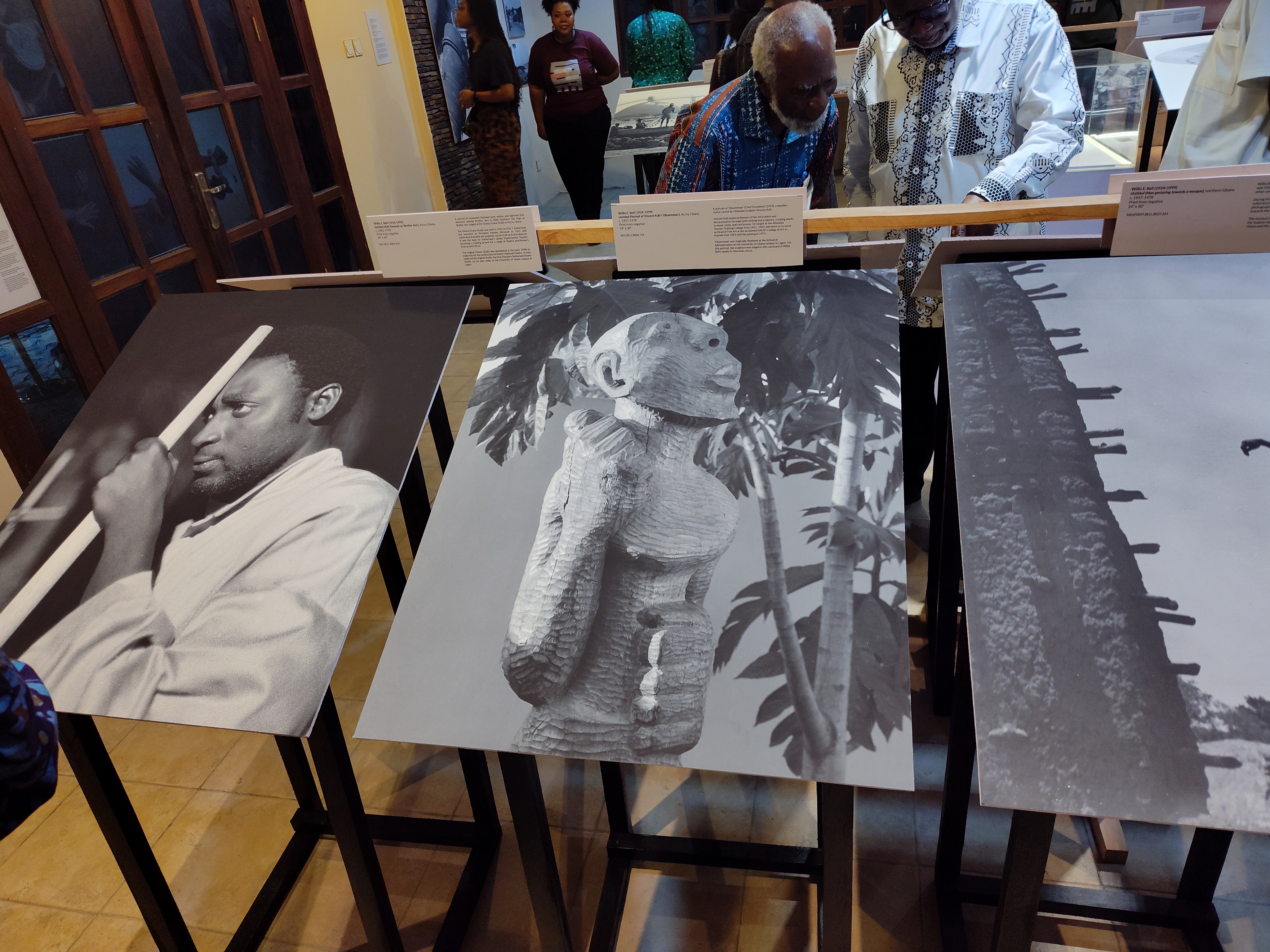
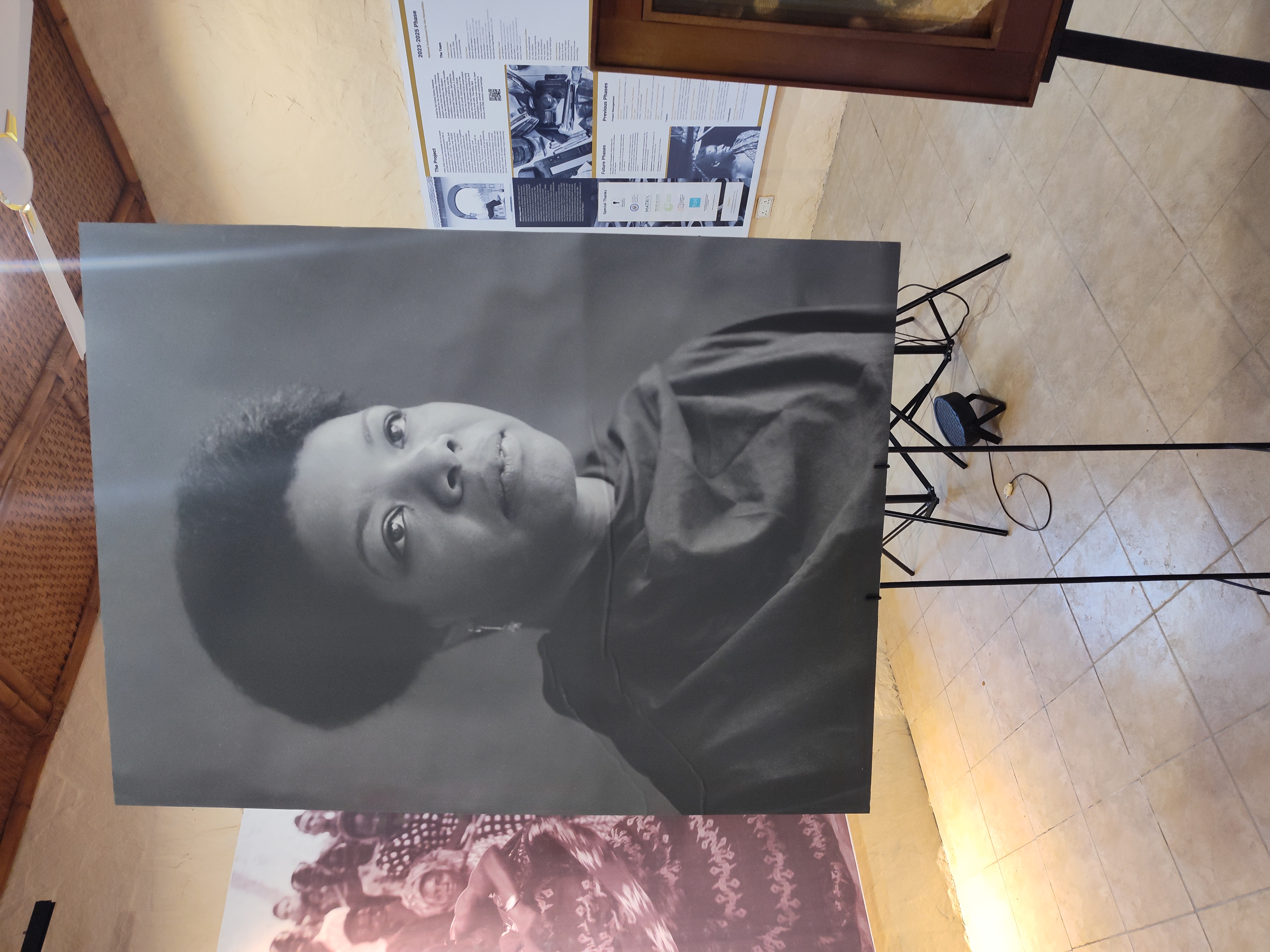
The public exhibition in Accra, Light & Shadow: A Movement in Stills, emphasized Bell’s deftness with light, motion, and form—a “movement in stills” that choreographs everyday life and invites the viewer into the nation’s becoming. Those discoveries went both ways. While the MSU team trained the Accra cohort in conservation and digitization, and the Ghana team trained the MSU side in historical nuance, names, language, and the ethics of naming across standards and local terminology, each team member brought diverse skillsets and, over time, learned from the others in all of these distinct areas.
Keller recalls opening a digital folder of scanned negatives and spotting a familiar face: “There was Vincent Kofi, an artist I teach about but of whom and of his work there are relatively few surviving images. It blew my mind to see so many of his images from different angles, in recognizable settings—even those the artworks were commissioned for—and to see the artist pictured in portraits and with his artworks in ways that I had previously never seen. The team wasn’t familiar with the artist, initially, so I was able to identify him and serve as a consultant in that instance.”
Navigating challenges
There were hurdles in getting an archival system set up. Bandwidth blips and courier delays threatened to slow the safe transfer of drives. Catherine Foley, project manager at Matrix, helped steer the team through those early challenges. Her guidance and knowledge in systems setup proved critical and ensured that technical and administrative obstacles didn’t derail the project’s momentum. “Catherine knew the systems and the bureaucracy,” says Sutherland-Addy. “She’d say, ‘There’s a bottleneck here but don’t worry about it, I’ll get it sorted out.’ That was extremely valuable for us.”
Staffing shifted and new hires had to be trained mid‑stream. And then, unexpectedly, the NEH grant was terminated in April 2025. “Matrix didn’t say they were going to stop working with us or that they were going to limit the amount of work that they would do,” says Phillips. “They just kept working, almost as though the grant had not been cut. The creativity with which they pivoted was really appreciated.”
“These are people you can trust,” adds Sutherland-Addy. “They believed in what we’re doing and supported us to do it.”
Sustainability was never an afterthought. To guard against the slow decay of custom database projects, Matrix delivered the archive as a lightweight, secure static site—fully searchable to users, but low‑bandwidth, easily mirrored or downloaded with permission for offline access, and more resistant to security drift. Crucially, the physical archive remains in Accra, with Mmofra Foundation, where it belongs.
A beginning, not an ending
By the time the team reconvened in Accra to launch the site and exhibition, “we felt like family,” Keller says. The Accra team—led by Crentsil and Serumaga-Musisi—curated 40 images from tens of thousands, framed and hung them, and hosted a one‑day program of talks, panels, and an evening opening. The Light & Shadow show brought a flood of public responses: the archive presents the fierce, distinct post‑independence spirit of Ghana—its life, energy, and hope.
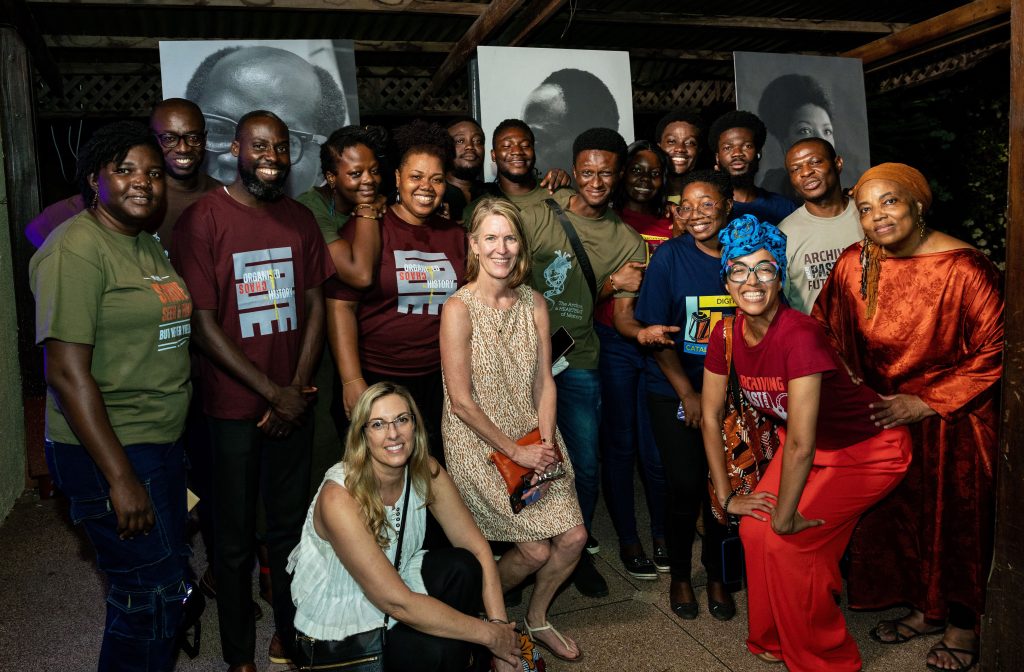
Plans are underway to travel the exhibition across Ghana so communities can see themselves, add context, and voice preferences for public access on specific images. The work is far from finished, and that’s the point. “We wanted to do the images justice… to tell the story and make room for what we don’t yet know. The beauty of it is watching people see, remember, and add to the story,” says Serumaga-Musisi.
“There’s been so many moving moments of people just completely swept up by what they’re seeing. Bell was so good at being invisible in these moments. He didn’t frame it in such a way that imposed a personal opinion. He just captured it with dignity and respect, but sort of teasing out the beauty of these moments. He couldn’t have even understood how meaningful that would be today.”
Collection at a glance
- Title: The Willis Bell Photographic Archive
- Scope: 40,000+ photographic negatives and prints (c. 1957–1978)
- Partners: Mmofra Foundation (Accra, Ghana) & Matrix (Michigan State University)
- Access: Public website at willisbellarchive.com
- Next up: Potential programming, teaching, and future phases of research. Possible exhibit at the MSU Museum in East Lansing, Michigan.