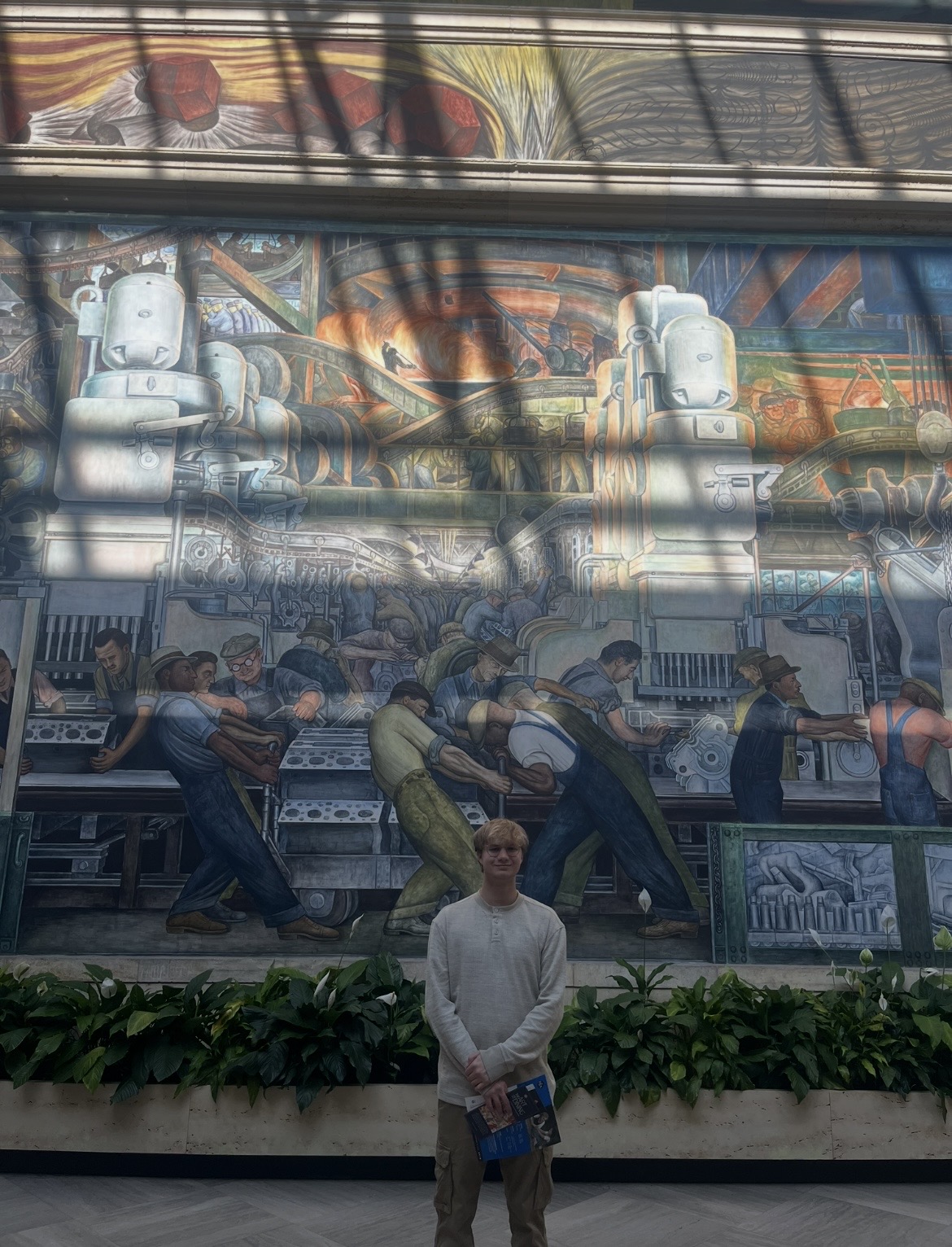
As a student thinking seriously about law, public service, and the power of historical understanding, Andrew Palmer represents the next generation of historians in action. A double major in history and political science (prelaw), Andrew has built a Michigan State experience that blends research, leadership, and meaningful engagement. In this spotlight, he reflects on the mentors and experiences that shaped his path and how studying history informs his future career in law.
What inspired you to pursue double majors in history and political science, prelaw?
I’ve always had a love of history. I think what really drew me to the program here at MSU were the topics which were being taught. Taking classes in the Young American Republic along with Indigenous-European Encounters in North America were really fascinating to me. I chose to go down a pre-law track because I wanted to make an impact in my community while acting as an advocate for other people.
What has been your most memorable experience so far?
One of my most memorable experiences at Michigan State was my planning of the event “Sparty Gras.” As a student coordinator at New Student Orientation, I worked with a team to put on a fall welcome festival for new students. We were able to attract an attendance of thousands of both new and returning students in the summers of 2024 and 2025, and it is now an annual event here!
How has studying History alongside Political Science shaped how you think about today’s social and legal challenges?
The coursework in both my Political Science and History classes often interlapped in really important ways. I think that having a historical perspective is not only beneficial but necessary to understanding the society we live in today. Having a historical perspective for certain policy choices allowed me to not only see their immediate consequences, but also to identify what they evolved out of and how they impacted people prior to their implementation.
Are you doing any type of research at MSU?
I am currently writing a senior honors thesis in history under the direction of Dr. Emily Conroy-Krutz and my faculty mentor, Dr. Thomas Summerhill. My topic is on the city of Charleston and its broader labor history in the antebellum and Civil War periods. This research has been illuminating in looking at labor in the context of Southern cities in the 19th century, along with the concept of “invisible labor.”
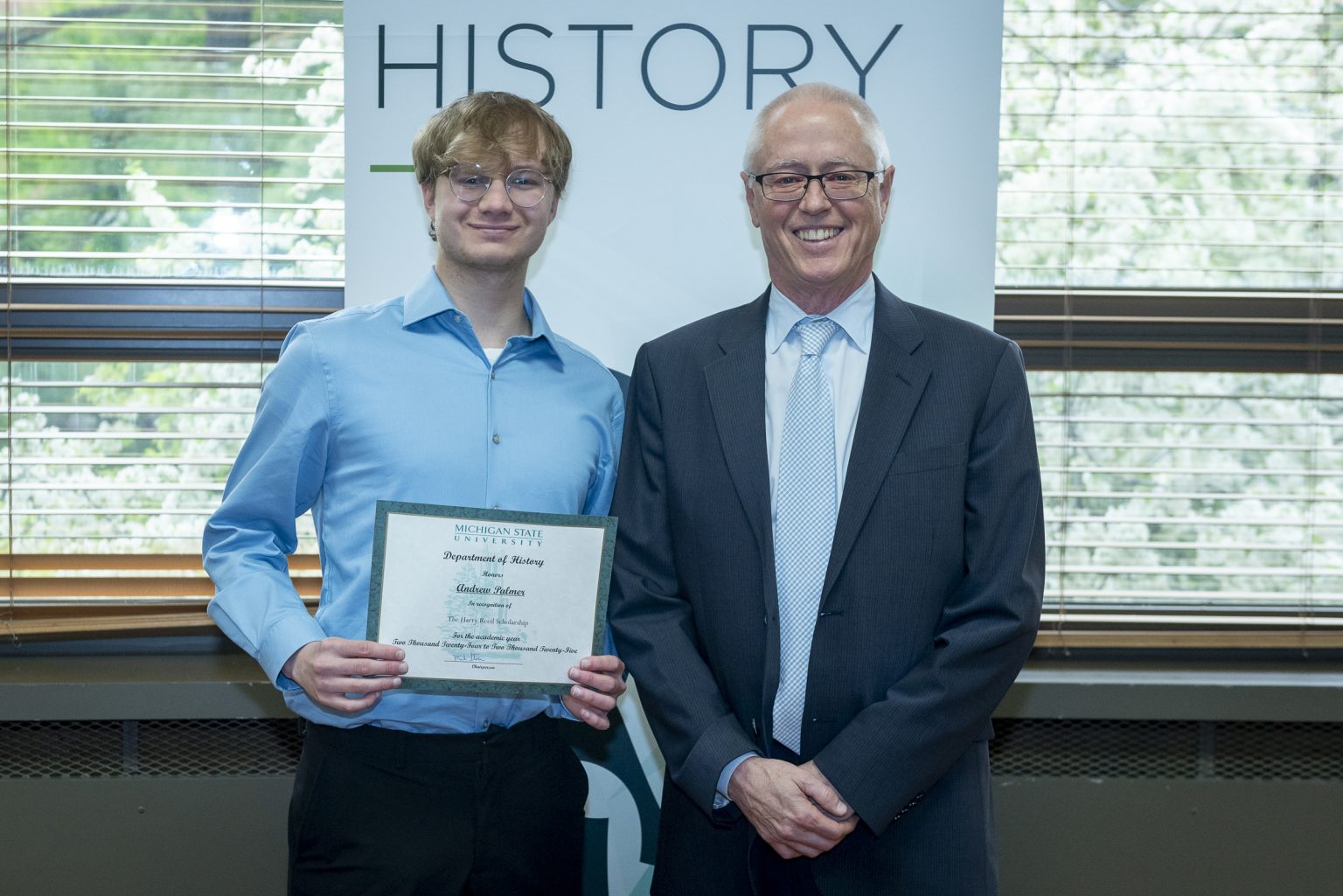
Any History professors who have made a lasting impact on you?
I would say Dr. Thomas Summerhill is one professor who has had a lasting impact on me. He is extremely passionate about the subjects he teaches and has offered invaluable advice as I work on my thesis. Dr. Karrin Hanshew is another professor who is not only passionate but very compassionate. Her courses have been some of the highlights of my time here.
What extracurriculars, clubs, networks, etc. are you involved in?
I am a Student Coordinator at New Student Orientation and have been working there for about three years. I also was a part of the Michigan Government Semester Program, where I worked as a judicial extern with the Michigan Court of Appeals. I am a member of the History Scholars as well.
What do you plan to do after graduation?
I recently accepted a position working full-time with a county clerk’s office at the circuit court department after my time at Michigan State. I will then begin applying to law schools in the fall with the goal of attending in fall or 2027!
What skills have you developed through your Political Science coursework that you see yourself carrying into law school and beyond?
My political science coursework has been vital in shaping my ability to conduct research. A lot of the political science classes I have taken at MSU have been extensively based on independent research, which is a skill I used heavily as a judicial extern. I definitely anticipate continuing to use it as a law student and beyond.
What advice would you give to incoming students who want to get the most out of their MSU experience?
Do what you are passionate about. Don’t ever be afraid to do what makes you excited to be here. Go to that talk, speak to that professor whose class you love, people share your passion here, take advantage. I can say I have, and I don’t regret it at all.
If you could time travel to any historical moment or era, where would you go and why?
If I had to choose a historical period to travel back to, I would choose to travel to Florence in the 16th century.