Jump to HeaderJump to Main ContentJump to Footer
Michigan State University
Department of History
  • Directory
  • Give

College of Social Science

Department of History

  • Academics
    • Overview
    • Majors, Degrees & Programs
    • Undergraduate
    • Graduate
    • Why Major in History?
    • Advising
    • Awards & Scholarships
    • Summer Courses
    Rajani_undergrad

    Why major in History?

    Learn more about History
  • |
  • Research & Outreach
    • Overview
    • Published Books
    • Journals
    • Digital Work
    JSDP

    Journal of Slavery and Data Preservation

    VIEW JOURNAL
  • |
  • News
  • |
  • Events
  • |
  • Alumni
  • |
  • About
    • Overview
    • Welcome from the Chair
    • Newsletters
    • Contact Us
    • Directory
    HST-shop

    Visit our online store

    History Shop
Department of History

College of Social Science

  • Academics
  • Research & Outreach
  • News
  • Events
  • Alumni
  • About

< Academics

  • Overview
  • Majors, Degrees & Programs
  • Undergraduate
  • Graduate
  • Why Major in History?
  • Advising
  • Awards & Scholarships
  • Summer Courses
Rajani_undergrad

Why major in History?

Learn more about History

< Research & Outreach

  • Overview
  • Published Books
  • Journals
  • Digital Work
JSDP

Journal of Slavery and Data Preservation

VIEW JOURNAL

< News

< Events

< Alumni

< About

  • Overview
  • Welcome from the Chair
  • Newsletters
  • Contact Us
  • Directory
HST-shop

Visit our online store

History Shop
  • Directory
  • Give

ACADEMICS

  • Majors, Degrees & Programs
  • Advising
  • Awards & Scholarships
  • Why History?
  • Undergraduate
  • Graduate

NEWS & EVENTS

  • Events
  • News

RESEARCH & OUTREACH

  • Published Books
  • Digital Work
  • Journals

ABOUT

  • Welcome from the Chair
  • Courses
  • Directory
  • Newsletters
  • Online Shop
  • Contact Us

ALUMNI

  • Give

Contact us

517-355-7500

Address

Old Horticulture 506 E Circle Dr East Lansing, MI 48824

Follow Us

  • Visit our Facebook page
  • Visit our page on X
  • Visit our Instagram page
  • Visit our LinkedIn page
  • Visit our YouTube page

If you're having accessibility issues, please let us know.

Know MoreTransparency Reporting: Budget & Salary/Compensation
  • Contact Information|
  • Site Map|
  • Privacy Statement|
  • Site Accessibility|
  • Call MSU: (517) 355-1855|
  • Visit: msu.edu|
  • Notice of Nondiscrimination|

SPARTANS WILL|© Michigan State University|

March 17, 2026

Exploring gender and salvation in premodern Japanese Buddhism

IMG_5844-1536x864


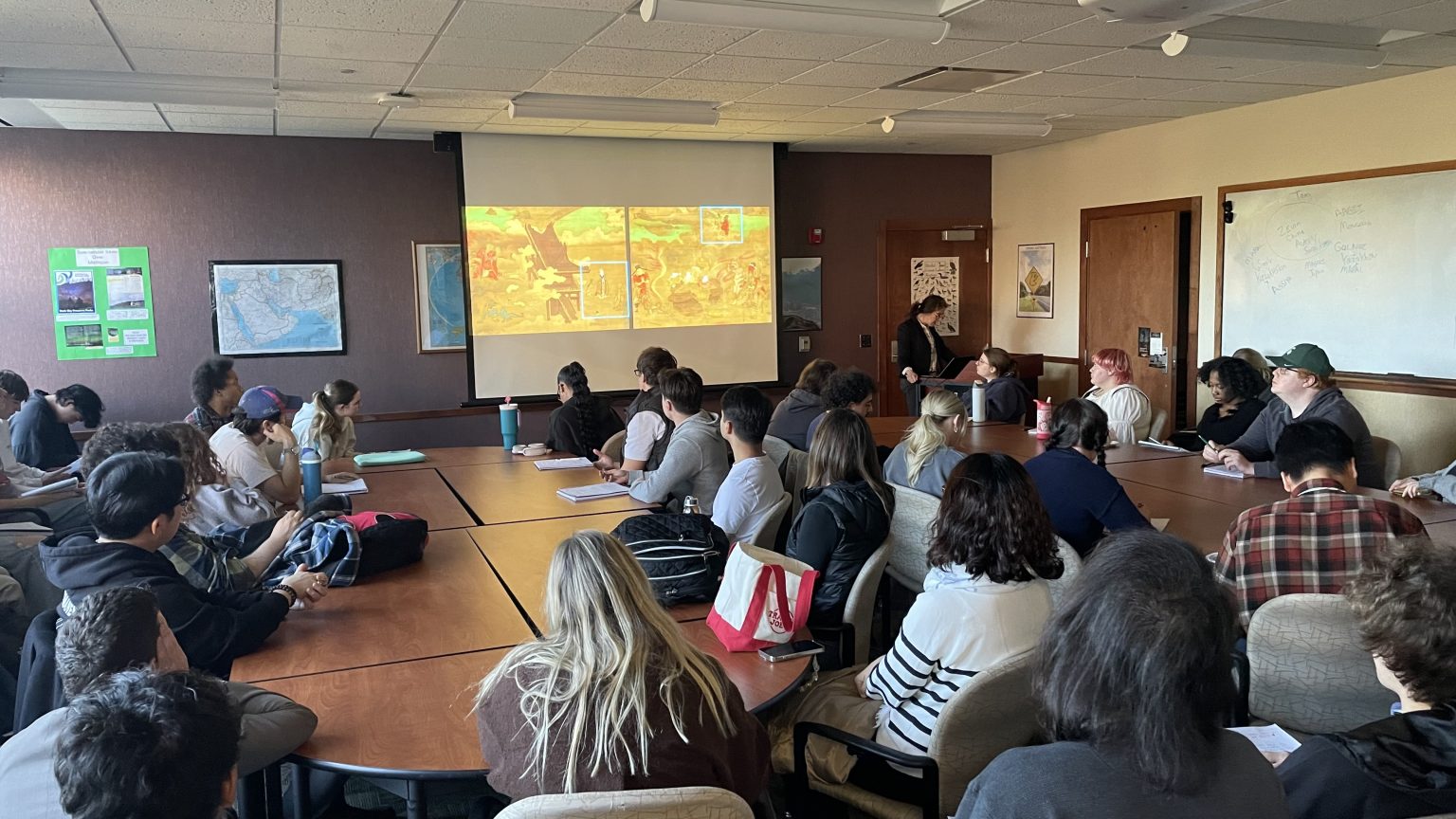
What does salvation look like when gender shapes the path to paradise? That question anchored a fall lecture at Michigan State University, where Dr. Mimi Chusid, assistant professor of Japanese art history at the University of Washington, discussed how medieval Buddhist art grappled with the spiritual fates of women and sinful men.

Hosted by Associate Professor of History Ethan Segal and Assistant Professor of Japanese Studies Michael Toole, the October lecture was titled Gendering the Afterlife: Saving Women and Sinful Men in Premodern Japanese Buddhism.  

Speaking to a packed room in the International Center, Dr. Chusid explored how gender shaped spiritual destiny in Buddhist traditions of medieval Japan, and how art reflected and reinforced these ideas.

Central to the discussion was the promise of rebirth in Amida Buddha’s Pure Land, a paradise attainable by recalling Amida at the moment of death. As Dr. Chusid explained, this ideal was far from universal. “What happens if the dying person is a woman?” she asked. “Gender could preclude them from the ideal death altogether.” Through vivid examples, she illustrated how women and sinful men were often portrayed as facing overwhelming obstacles, making descent into hell seem inevitable despite their devotion.

Dr. Chusid analyzed a series of thirteenth- and fourteenth-century Buddhist hell paintings, including depictions of the Ten Kings and dramatic scenes of salvation. One striking narrative showed a monk’s desperate attempts to liberate his mother from hell, a journey that involved gruesome punishments such as being cut in half or climbing a tree of spikes before redemption could occur. These images, she noted, reveal both the spiritual “inferiority” ascribed to women and the paradoxical power they held in ritual contexts.

The lecture also examined how everyday practices intersected with these beliefs. For example, one story featured a man whose indulgence in meat and alcohol guaranteed his damnation, despite his wife’s pleas for reform. After her death, demons lurked at the edges of his deathbed scene, a stark contrast to the golden beams symbolizing a successful passage to the Pure Land in idealized imagery.

As Dr. Chusid concluded, these works challenge us to reconsider assumptions about equality in spiritual traditions and highlight the enduring impact of gendered discourse on ideas of salvation.

The event was made possible by the Japan Council Endowment administered by the MSU Asian Studies Center.