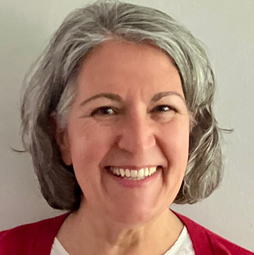
Professor Emine Evered, a scholar of Middle Eastern history at Michigan State University, has been awarded a Fulbright U.S. Scholar Award for Spring 2026. She will travel to Turkey to conduct research for her project, “Lucky Numbers: The Role of Regulated Gambling in Turkish Nation-Building (19th–20th Century).”
Dr. Evered’s research explores how gambling and state-run lotteries shaped the Turkish Republic after the fall of the Ottoman Empire in 1922.
She studies how a small, late-Ottoman lottery was transformed into a nationwide institution by a financially struggling new state, showing how lotteries functioned not only as a kind of “hidden taxation,” but also as tools to encourage patriotism, nationalism, and aspirations for upward mobility.
The Fulbright Award builds on Dr. Evered’s longstanding interest in how everyday practices, cultural norms, and social regulations became intertwined with questions of state power, national identity, and modernity.
Her first book, Empire and Education Under the Ottomans: Politics, Reform and Resistance from the Tanzimat to the Young Turks, examined educational reform and resistance in the context of society-state relations and international politics. Her second book, Prohibition in Turkey: Alcohol and the Politics of Identity, investigated the history of alcohol and its regulation, offering insight into the politics of identity in the late Ottoman and early republican periods. It was during this research that Dr. Evered began to notice parallels between alcohol and lotteries—both state-controlled monopolies designed to regulate public life and generate revenue—sparking her interest in the Turkish national lottery.
“Turkey’s economic nationalism framed the lottery as a national asset, protected under state monopoly,” she said. “Unlike in the late Ottoman Empire, when European powers profited from key industries, the republican state ensured that no foreign actors benefited from the lottery. It also portrayed itself as a corruption-free regulator at a time when lotteries abroad were often plagued by fraud.”

“As a result, the lottery came to be seen as a national treasure, so much so that one parliamentarian later lamented its privatization as akin to ‘killing the goose that laid the golden eggs.’”
While in Turkey, Dr. Evered will conduct extensive archival research at institutions such as the National Lottery Administration in Ankara, the Turkish National Library, and the Turkish Republican Archive. She also plans to visit iconic lottery stands that remain part of Turkey’s urban landscape, including the famous shop of Nimet Abla (1899–1978), known as the “Queen of the Lottery” because of the extraordinary number of winnings linked to her stand. Even today, long lines form outside her shop, a vivid reminder of the lottery’s enduring cultural presence.
Dr. Evered has three goals for her Fulbright-supported research:
- to contribute to scholarship on the social and political dimensions of lotteries and gambling, showing how they intersect with state policy and national identity;
- to broaden the study of visual nationalism that often focus on stamps and currency; and
- to place Turkey’s case in comparative perspective to expand the understanding of legalized gambling in a global context.

Her work will culminate in a book-length manuscript tracing the evolution of the Turkish lottery from the mid-19th century to the present. She also plans to incorporate her findings into her MSU courses (History of the Modern Middle East and World History) and will develop a new undergraduate seminar on the comparative history of gambling and lotteries.
For Dr. Evered, this project is also personally meaningful. Her late father had a lifelong fascination with the lottery, and in the mid-1980s, he won the second-largest national prize, which had a profound impact on their family.
“This experience gave me unique insight into the role lotteries play in individuals’ lives and society as a whole,” she said. “It enables me to explore not only the state’s role in the lottery but also the experiences of ordinary people, revealing a ‘history from below.’”